Banner

Welcome to Edoardo Fabbrini's homepage

Postdoctoral researcher · C++/Fortran/Python developer · Consultant at SOMA .

Affiliation & Contact

Affiliation: Kyoto University, Graduate School of Science (SACRA)

Research interests

Profile image

Applied Mathematics: I use analytical tools from the Calculus of Variations and the theory of Elliptic Partial Differential Equations, along with numerical methods such as the Finite Element Method and Density Functional Theory, to study materials across continuum and atomistic scales within a unified framework. My current focus is on developing a theoretical and computational platform to tune the mechanical and electronic properties of graphene and metal membranes by tailoring the distribution of topological defects (disclinations and dislocations).

Computational Chemistry: I developed a modular computational platform in Python (using RDKit and ASE) to explore the chemical space of diarylethene derivatives via a custom-designed evolutionary algorithm. The platform can interface directly with Turbomole for high-fidelity Density Functional Theory simulations or integrate machine learning models trained specifically for the case at hand. Key features include the ability to generate symmetric molecules, perform structural sanity checks, and limit the maximum number of mutations.
Fluidynamics-Structure interactions (FSI): My earlier work includes aeroelastic stability analysis of rotating systems in compressible flows using a FORTRAN-based multiphysics tool.

Selected material

Latest publication

Machine Learning-based closed-loop for optimizing HOMO-LUMO Gap in diarylethene. Physical Chemistry Chemical Physics (2026).

Diarylethenes are a class of photochromic molecular switches whose performance in photoresponsive applications critically depends on the optimization and fine-tuning of the HOMO-LUMO gap. The ability to modulate this gap through rational structural modification has become a key factor in expanding the functionality of diarylethene-based systems. In this work, we introduce an automated, closed-loop optimization framework in which a machine learning model, trained on an existing dataset, serves as a surrogate model to predict costly-to-obtain measurements during the exploration of a vast diarylethene derivative chemical space. This approach enables the efficient identification of candidate molecules optimized for a target HOMO-LUMO gap without human intervention. The top-performing candidates predicted by the model are subsequently validated using density functional theory calculations. Comparisons with available benchmarks demonstrate that the proposed strategy outperforms existing approaches. Overall, this study provides a general methodology and practical tools for integrating molecular structure data with advanced machine learning techniques to accelerate the discovery and design of photoresponsive materials with tailored electronic properties.
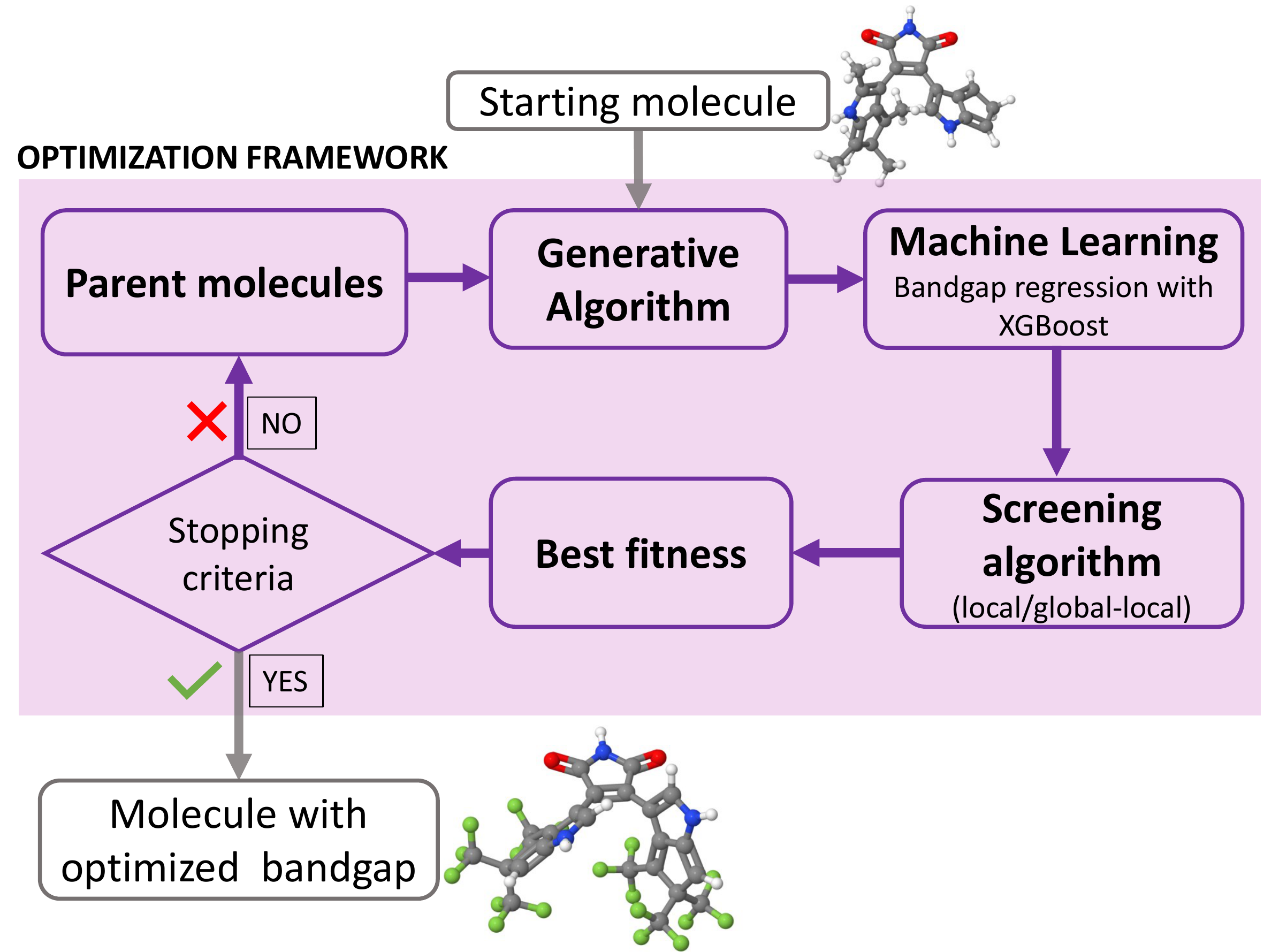
Graphical abstract

Open-source software

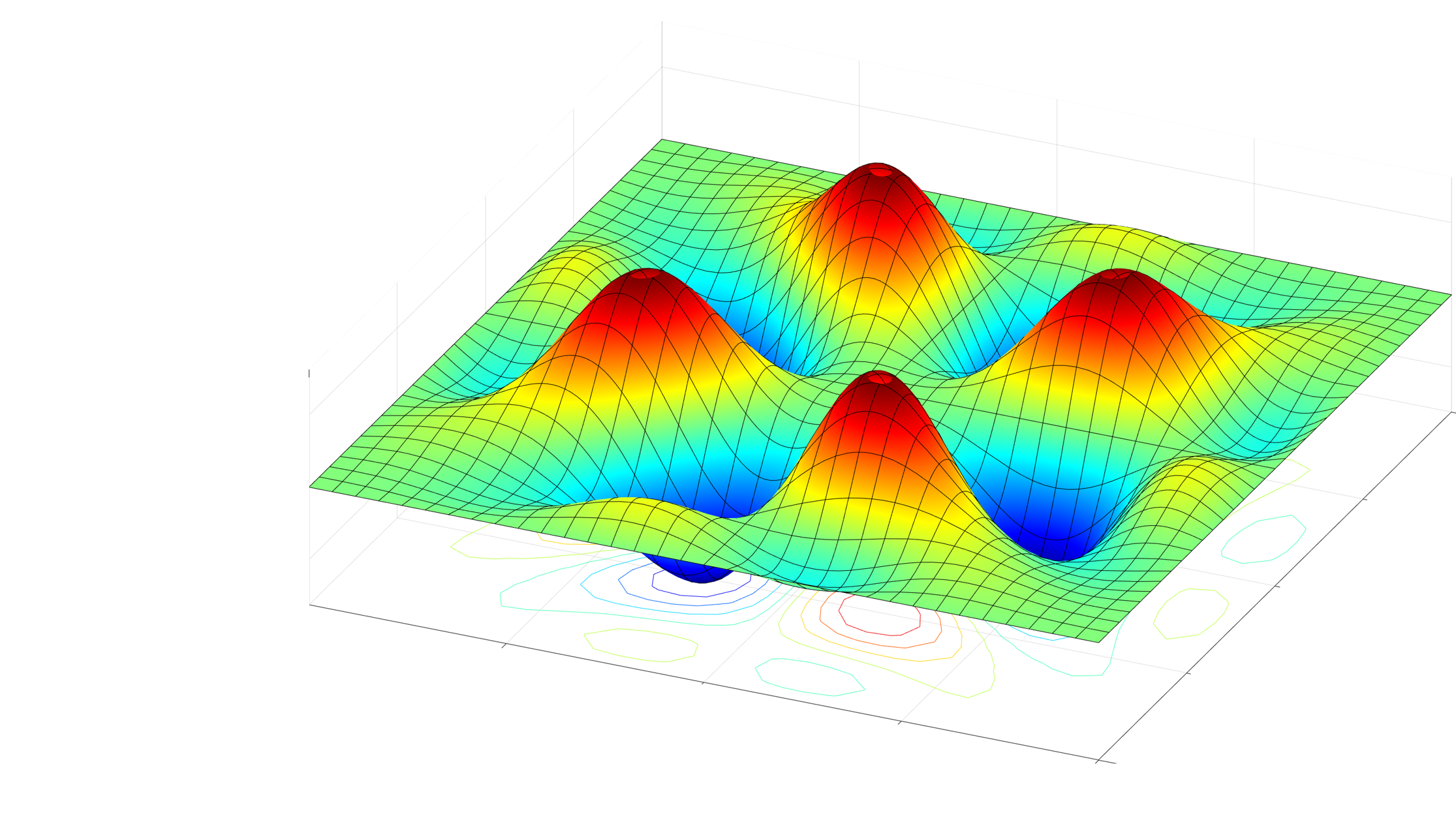
Demonstration of a finite-element solver for Föppl–von Kármán plates with wedge disclinations. The interface allows users to freely position a wedge disclination on a circular membrane. The solver employs a Discontinuous Galerkin method and a Newton–Raphson algorithm to numerically solve the system of two quasi-linear partial differential equations. Check it out here.

SOMA — startup

At SOMA we combine multiphysics and multifidelity modeling with Machine Learning and HPC solutions to achieve remarkable engineering products. Learn more at somatwin.com